TERRA CONFLICTUS / EARTH, 2066
THE PLANET BROKE.
THE CONFLICT CONTINUED.
Climate collapse rearranged who controls what. Fresh water is the new oil. Six superpowers carved up what was left, and the fighting just stopped being called war.
This site is that world as an open archive: a tabletop wargame and RPG, short stories and serials, three in-world magazines, playable browser adventures and a live sports circuit, all reported from the inside. Free. No account. Pick a way in.
 LOST ANGELES · THE HEIST ECONOMYWALK LOST ANGELES ↗
 SAHARAN OASIS CITY · THE WATER FORTRESSENTER THE OASIS ↗
 NEO-TOKYO · THE SHOWCASE CITYGO UNDER NEO-TOKYO ↗
 FLOODED LONDON · CLICKABLE ISOMETRIC CITYEXPLORE LONDON ↗
 THE ATLAS GLOBE · EVERY THEATRE, LIVESPIN THE GLOBE ↗


 FIELD FICTION · NEW STORIES MOST DAYSREAD THE STORIES ↗


 THREE IN-WORLD MAGAZINES · LATEST ISSUESREAD THE PRESS ↗
PALEO STOCK · A GENE-FORGED OPERATOR, KITBASHEDSEE THE KITBASH ZINE ↗
THREE IN-WORLD MAGAZINES · LATEST ISSUESREAD THE PRESS ↗
PALEO STOCK · A GENE-FORGED OPERATOR, KITBASHEDSEE THE KITBASH ZINE ↗
 THE CORE BOOK · RPG · SKIRMISH · SOLOREAD THE RULES ↗
 LAST CREDIT · THE ARCADE · FIVE BROWSER GAMESPLAY IN THE BROWSER ↗
 THE CUTAWAY CITY · FIVE FLOORSSTART WITH A LOOK INSIDE ↗

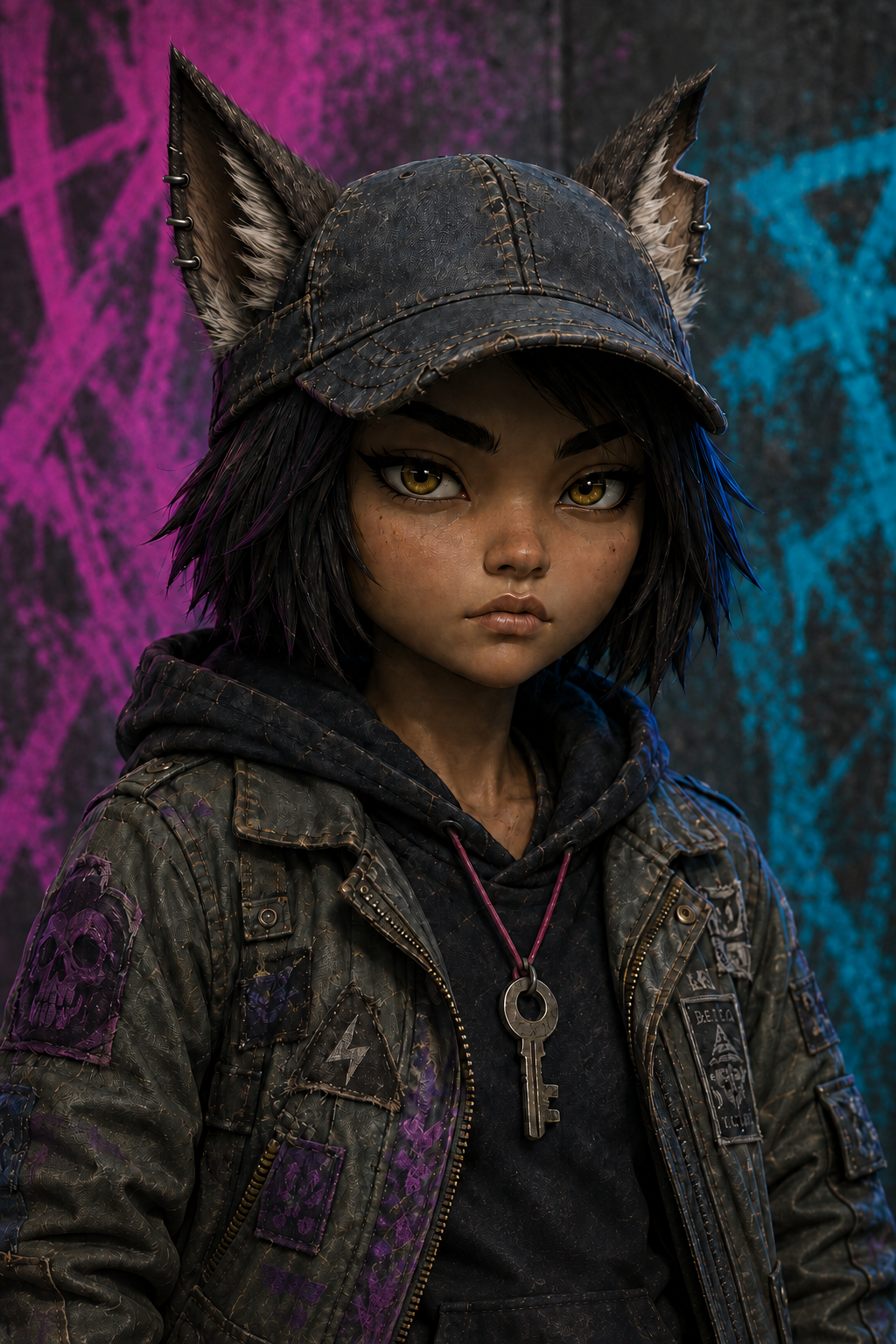
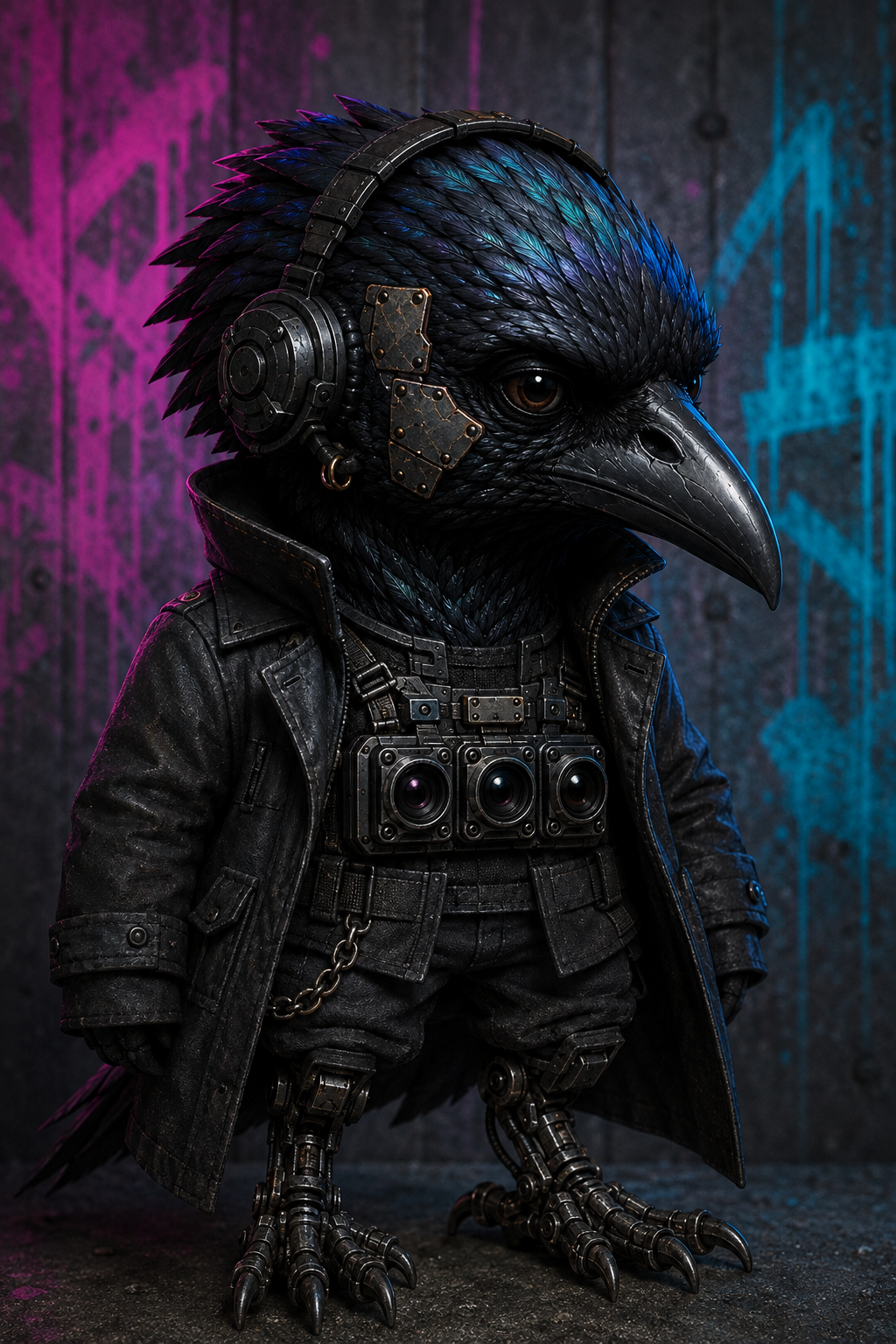



NEW HERE? START WITH THE CREW
Five gene-forged operators. One garage in Lost Angeles. Work that rarely goes to plan.
Warranty Void is the easiest way into the world: a crew you can meet in a minute, a city you can walk, and jobs you can read, run at the table or watch as a channel. Everything else on the site radiates out from here.
01 / READThe stories.
Field Fiction files most days: short stories, serials and collected volumes, every one with its own cover. Start anywhere.
THE WHOLE SHELF ↗
CLEAN READNo. 48 · PULP
HAND OVER HANDNo. 47 · ADVENTURE
FROST LINENo. 46 · NOIR
 FOURTH VOICENo. 45 · ADVENTURE
 SHORT BREAKNo. 44 · PULP
 PASS FEENo. 43 · SYSTEMS
 BLANK STOCKNo. 42 · NOIR
 FOSSIL WATERNo. 41 · PULP
 HEADCOUNTNo. 40 · ADVENTURE
 BELOW LINENo. 39 · NOIR
 Surplus StockCOLLECTED VOLUME
 In Good StandingCOLLECTED VOLUME
 The Clean NumberCOLLECTED VOLUME
 The InstrumentCOLLECTED VOLUME
 The CarryCOLLECTED VOLUME
ALL 48 STORIES
The CarryCOLLECTED VOLUME
ALL 48 STORIES+ SERIALS ↗
02 / PLAYThe table.
A skirmish wargame, an RPG, a solo system and a mission board. Every book is free to read in the browser or print.
THE PRINT LIBRARY ↗
 RPG Quick Start
 Skirmish Quick Start
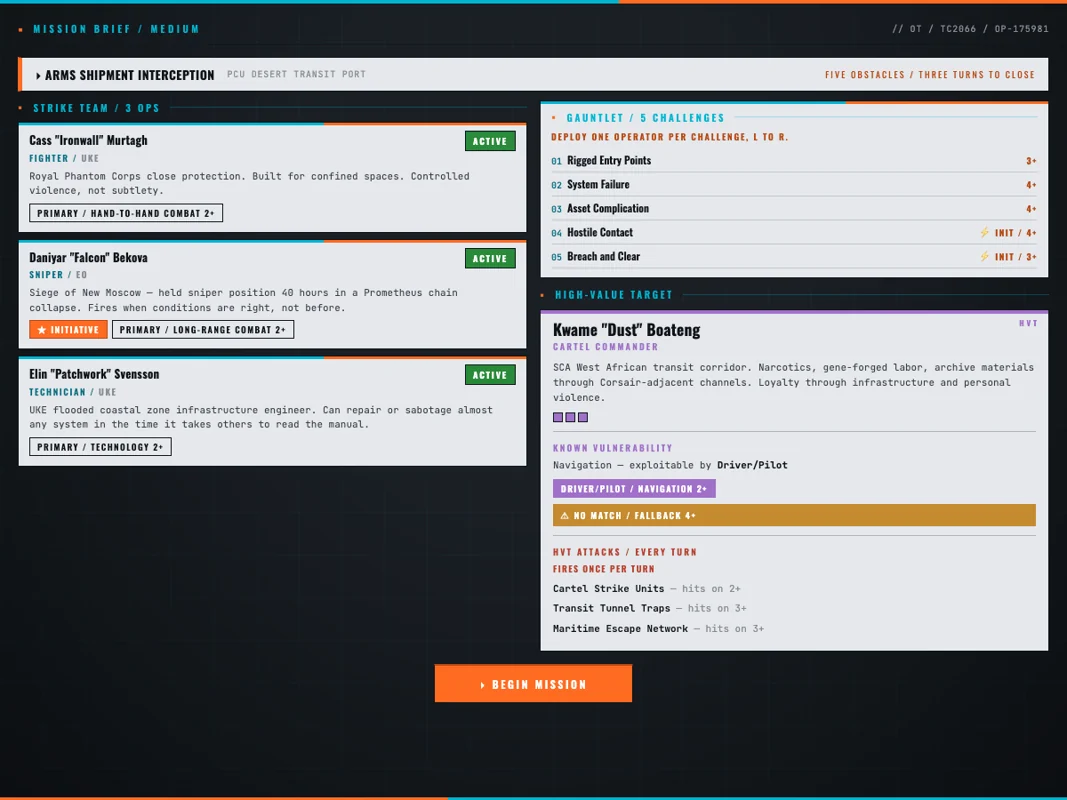
 High-Value Target
03 / EXPLOREThe places.
Four cities illustrated and on record, one of them clickable district by district. The rest of the world is a globe you can spin.
ALL PLACE RECORDS ↗
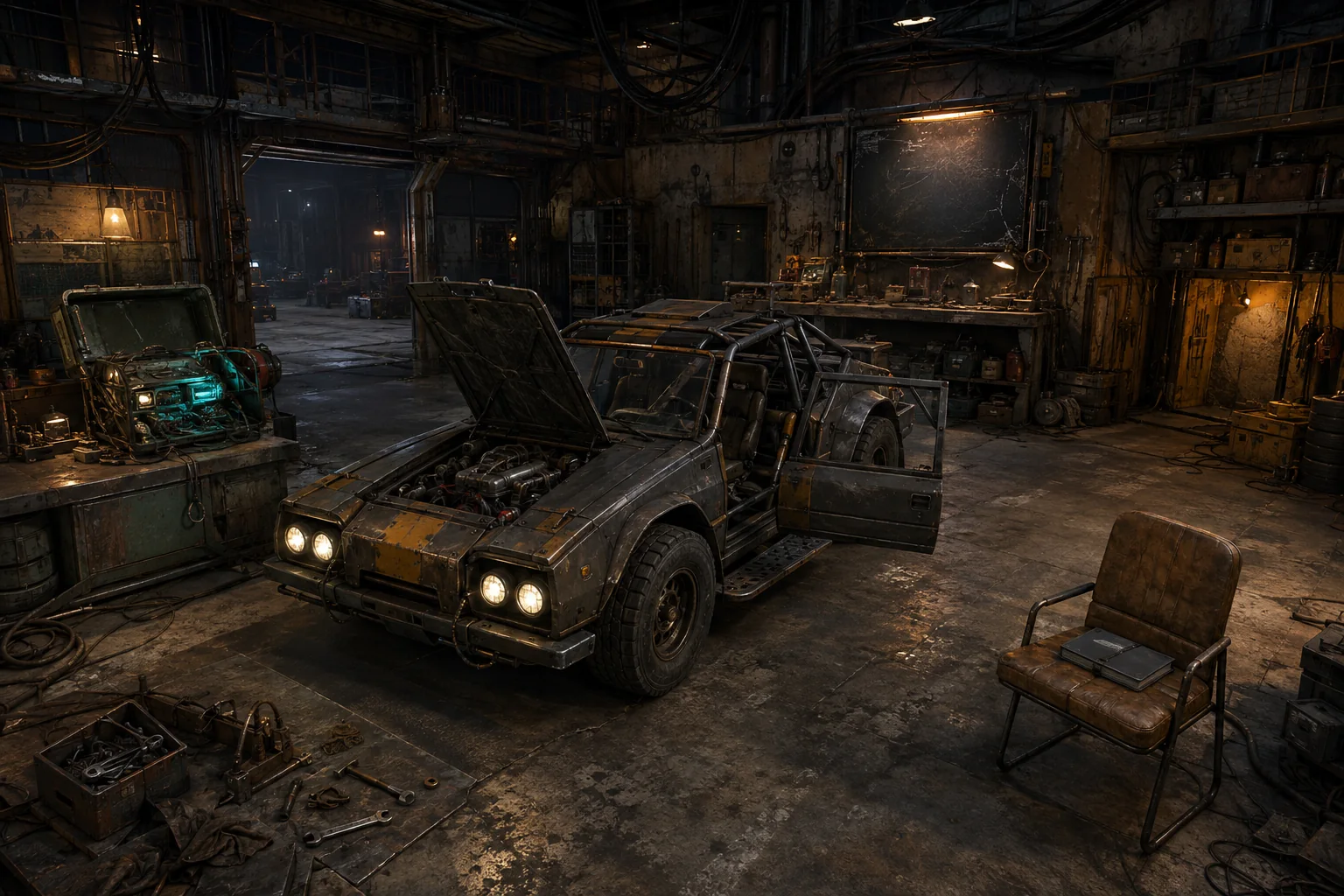
LOST ANGELESThe heist economy.
Warranty Void’s city: freeway stacks, cable cars, a river of markets. Walk it.
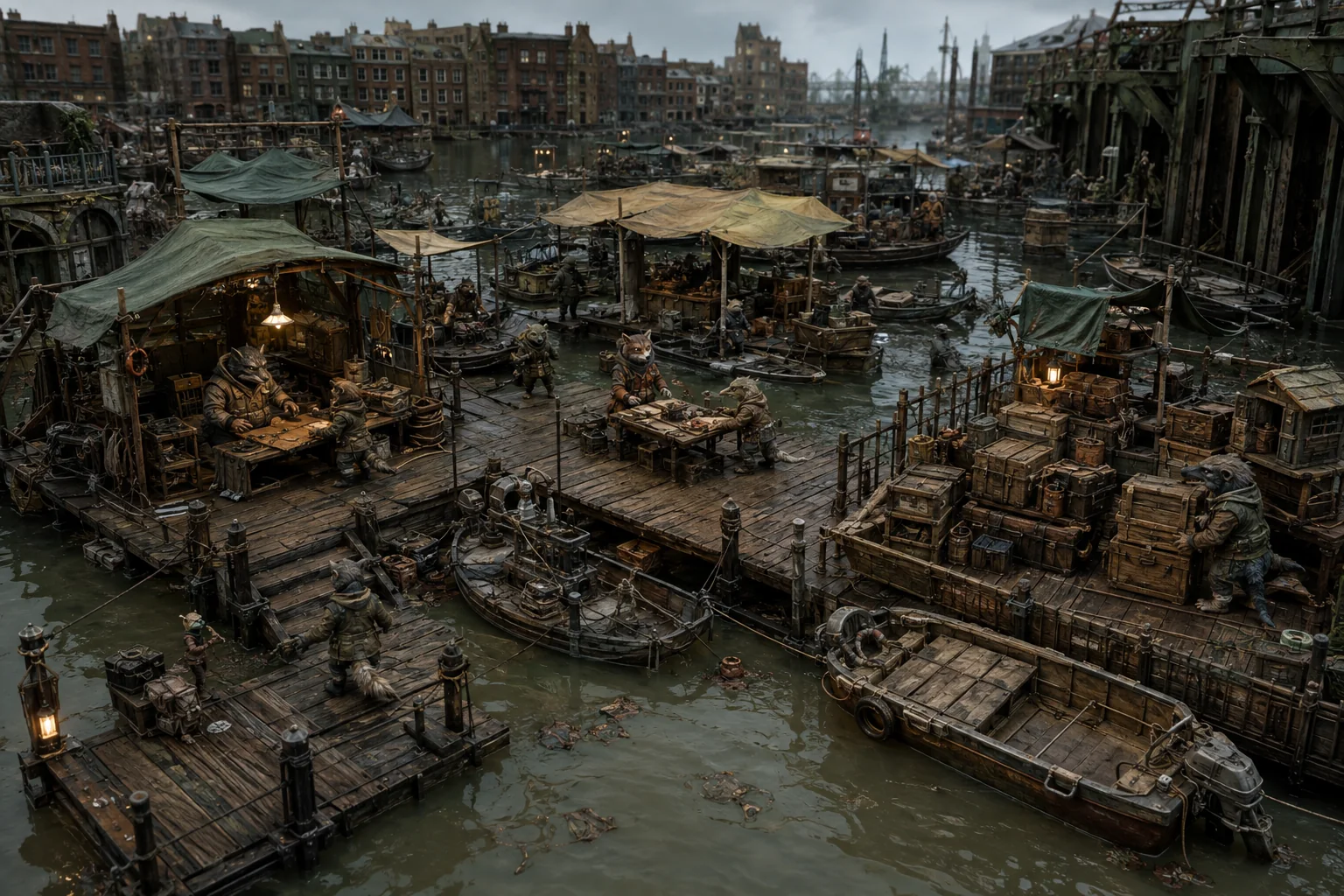
WALK LOST ANGELES ↗FLOODED LONDONThe streets are waterways now.
An isometric drowned city. Click a district for its atlas, its people and its jobs.
EXPLORE LONDON ↗NEO-TOKYOA showcase city, and what runs it.
Seven districts above ground. An unacknowledged service world underneath.
GO UNDER NEO-TOKYO ↗SAHARAN OASIS CITYA fortress built around water.
Desalination towers, a turquoise reservoir and a wall with guns on it.
ENTER THE OASIS ↗THE ATLAS GLOBEThe whole broken planet.
Spin it. Every theatre, hub and city on record, with a live weather and climate layer.
SPIN THE GLOBE ↗04 / ARCADEPlay in the browser.
Five illustrated games set in the world: point-and-click heists, a drowned-city adventure, a card game. No install, no account.
ENTER THE ARCADE ↗

05 / FOLLOWThe world, live.
Three magazines report the same broken planet from three angles. A pirate sports signal covers the circuits. A sportsbook takes positions on all of it.
EVERY WIRE ↗
 THE SPREAD
Every circuit. One pirate signal.
Results, standings and the studio.
TUNE IN ↗ THE LINE
Everybody has a position.
The Tooth and Gear’s fictional sportsbook.
TAKE A BOOTH ↗FILED THIS WEEKThe desks never close.
The newest filings across every publication, refreshed on every deploy.
THE LIVE WIRES ↗
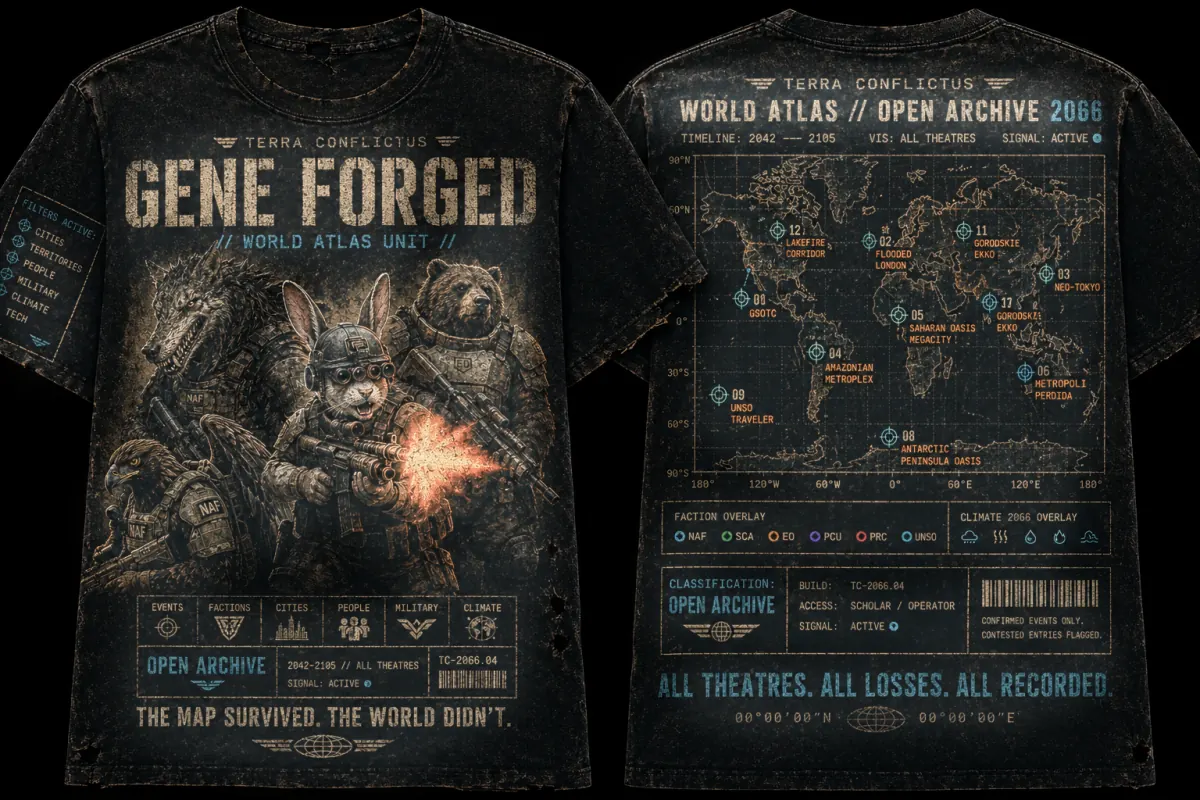
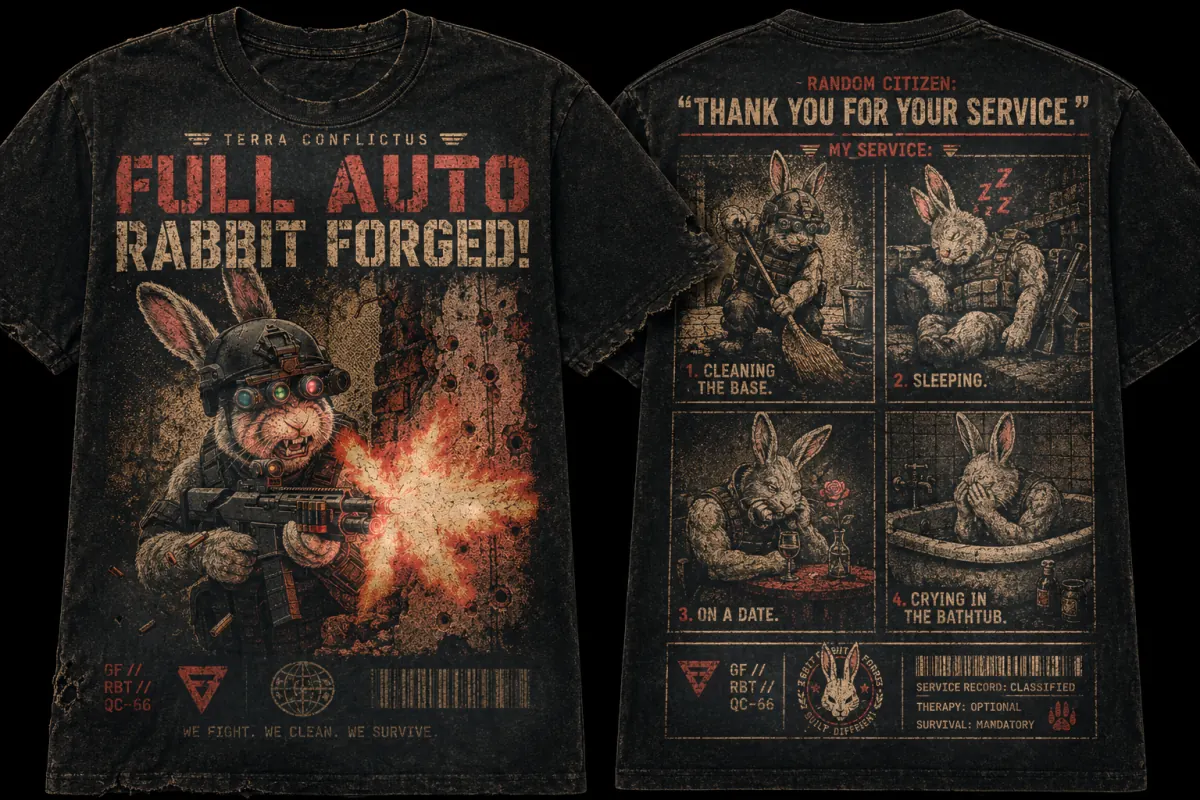
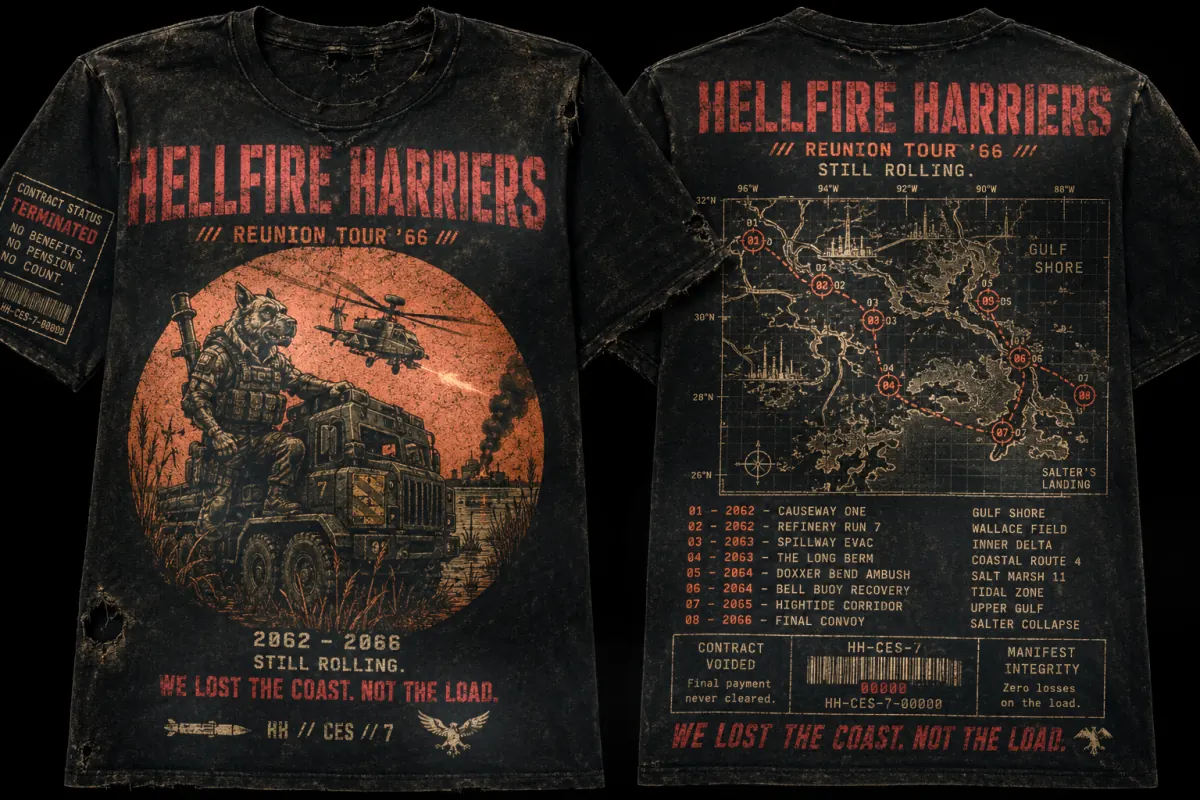
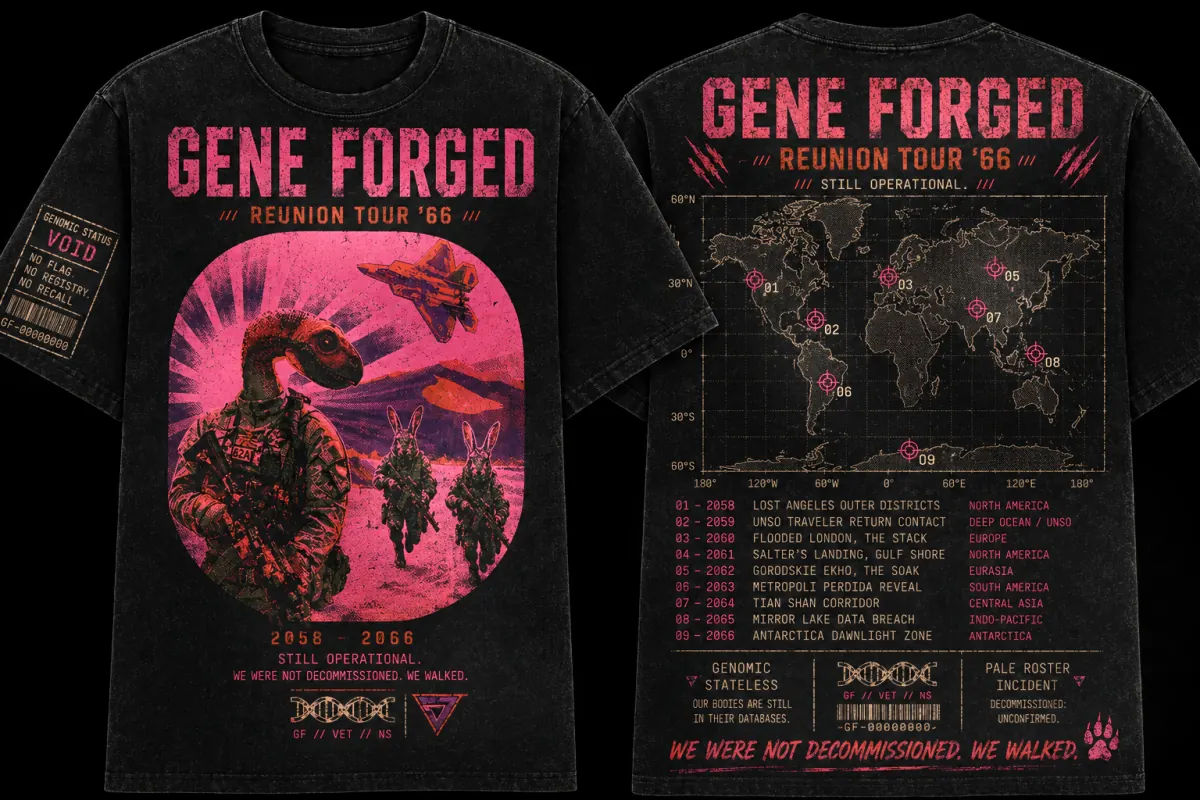
TOUR MERCHWear the war.
Recovered apparel from the world, not merchandise about it: tour shirts for units that never toured. Drop pending.
SEE THE SHIRTS FULL SIZE ↗